
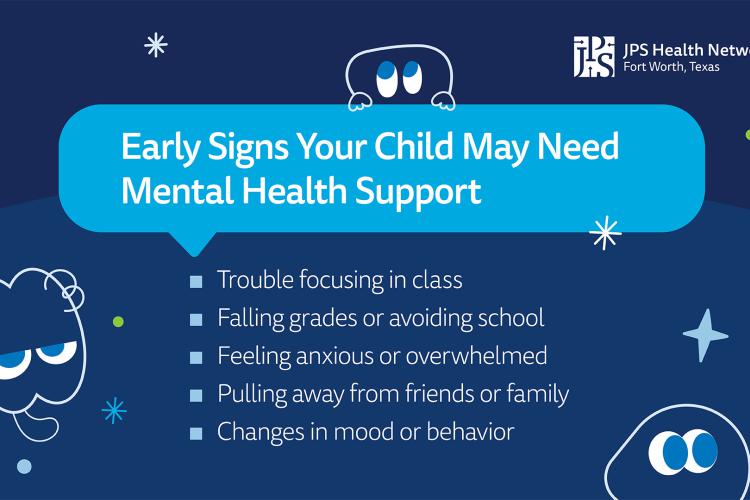
For many children and teens, mental health concerns do not start with a diagnosis. They begin quietly. A child may experience changes in appetite or suddenly withdraw from friends. A teenager may have trouble focusing or be consumed by anxiety that is difficult to explain.
Across Tarrant County and beyond, families are trying to understand what their children are experiencing and when to seek mental health support. “Honestly, we’re seeing a growing number of children and teens struggling with mental health,” said Gunit Kahlon, MD, MHA, Program Director of the Child and Adolescent Psychiatry Fellowship. “And while it hasn’t always been easy to talk about, since the pandemic there's been a significant rise in anxiety, depression, and different kinds of distress.”
Much of that distress is showing up in everyday life, with children withdrawing from interactions, becoming easily frustrated, or feeling pressure to be perfect in ways that didn’t exist before. Social media can intensify this, with comparison and the pressure to maintain a certain image adding strain to a child’s emotional well-being. A common misconception is that mental health care is medication-first. In reality, treatment often begins with therapy and supportive interventions.
“We’ve graduated two child and adolescent psychiatrists, and now we’re graduating two more. That’s four more in the community than we had before.”
When medication is needed, it plays an important role. When closely monitored and paired with follow-up care, it can help stabilize symptoms, improve functioning, and allow children to better engage in therapy and daily life before challenges escalate. As more families seek help, access to timely care has become more difficult. Long wait times, limited resources, and a shortage of child and adolescent psychiatrists can delay support for families trying to understand their child’s needs. For many families, even taking the first step can feel overwhelming. “They feel like they’re just kind of swimming without any floaties in the ocean because they don’t know where to go or what to do,” Dr. Kahlon said.
At JPS Health Network, care begins with listening. Clinicians work to understand what a child is experiencing emotionally, socially, and behaviorally, before partnering with families to determine the right level of support.
Support can include therapy, family guidance, school-based interventions, and when appropriate, medication as part of a broader care plan. Medication management is an ongoing process that includes monitoring, follow-up, and adjustments to ensure children are supported safely over time.
“I want to stress how, yes, we’re psychiatrists, yes, we’re medical doctors, but medication is not always the first approach,” said Nanette Allison, DO, Medical Director of CPAN and TCHATT and the Associate Program Director of the Child and Adolescent Psychiatry Fellowship.
Without timely support, these challenges can begin to affect relationships, confidence, and overall development.
“It’s preventative,” Dr. Kahlon said. “We want to prevent delays or challenges emotionally, socially, and academically, because mental health affects all of that.”
The goal is early support that helps families navigate concerns before they reach a crisis point. But access remains a challenge. Nationwide, there is a shortage of child and adolescent psychiatrists to meet growing demand.
“They found that we need 48,000 to 49,000 child and adolescent psychiatrists to meet the demand,” Dr. Kahlon said.
To help address this gap, JPS is investing in solutions that expand the workforce, including its Child and Adolescent Psychiatry Fellowship program, which trains new specialists to serve communities like Tarrant County.
Since launching the program, JPS has already begun to see results.
“We’ve graduated two child and adolescent psychiatrists, and now we’re graduating two more,” Dr. Kahlon said. “That’s four more in the community than we had before.”
While the numbers may be small, each new clinician expands access for families who might otherwise face long waits or travel significant distances for care.
There is also a strong emphasis on follow-up and ongoing medication management when treatment is needed. Regular check-ins allow providers to track progress, adjust treatment when necessary, and identify early changes in mood, behavior, or functioning before they become more serious.
Alongside clinical care, clinicians encourage families to stay closely connected to their child’s emotional world, checking in, asking questions, and noticing shifts in sleep, mood, energy, or social behavior. Some of these changes may reflect normal adolescence, while others may signal a need for additional support.
If you or someone you know may benefit from behavioral health support, JPS Health Network is here to help. JPS continues working to meet families where they are by providing support, education, and guidance to help them navigate mental health care with confidence. The focus remains on early intervention, reducing stigma, and ensuring no child faces these challenges alone, because with the right support, even small steps can make a meaningful difference.
To learn more about Behavioral Health Services or schedule an appointment, call 817-702-3100.