

Mylee Guthrie had just graduated from high school and was looking forward to everything that comes with the next chapter of life. An athlete, active in her community and surrounded by family and friends, she spent her summer working near her hometown of Santa Anna before heading off to college.
Then, on June 25, 2025, everything changed.
Like any other workday, Mylee got ready that morning, packed what she needed, and headed out the door. While driving to work, she was involved in a severe motor vehicle crash that left her with life-threatening injuries.
Mylee remembers very little about the crash itself. She later learned from first responders that her vehicle had gone underneath the rear of a large dump truck. EMS crews freed her from the vehicle and rushed her to Hendrick Medical Center Brownwood.
“It wasn't just, ‘We're here to patch you up and send you on your way.’ It’s, ‘We're here to take care of you. ’”
“When I got that phone call, I knew something wasn't right,” Tom Guthrie, Mylee’s father said. “As a parent, one of your greatest fears is when your child gets their driver's license. We were really worried, really scared, and just trying to stay calm.”
Mylee's care team at Hendrick evaluated her injuries. While Brownwood plays an important role in the region’s trauma system; the complexity of Mylee’s injuries required advanced specialists, technology, and around-the-clock resources only available at a Level I Trauma Center.
Jonathan Ford, MD, an emergency medicine physician at Hendrick Medical Center Brownwood and former JPS Health Network emergency medicine resident and attending physician, made the decision to transfer Mylee to JPS.
“Brownwood's a Level III. Hendrick Medical Center Abilene is a Level II. While we handle many trauma cases, the most complex injuries are often referred to a tertiary care facility such as JPS,” Dr. Ford said. “I have great trust that patients are going to get the best care there. I know the physicians. I know the nurses. I know the people taking care of them. They genuinely care about helping people get better.”
After she was stabilized, Mylee was airlifted to JPS Health Network’s Level I Trauma Center, where a multidisciplinary trauma team was activated to care for her injuries.
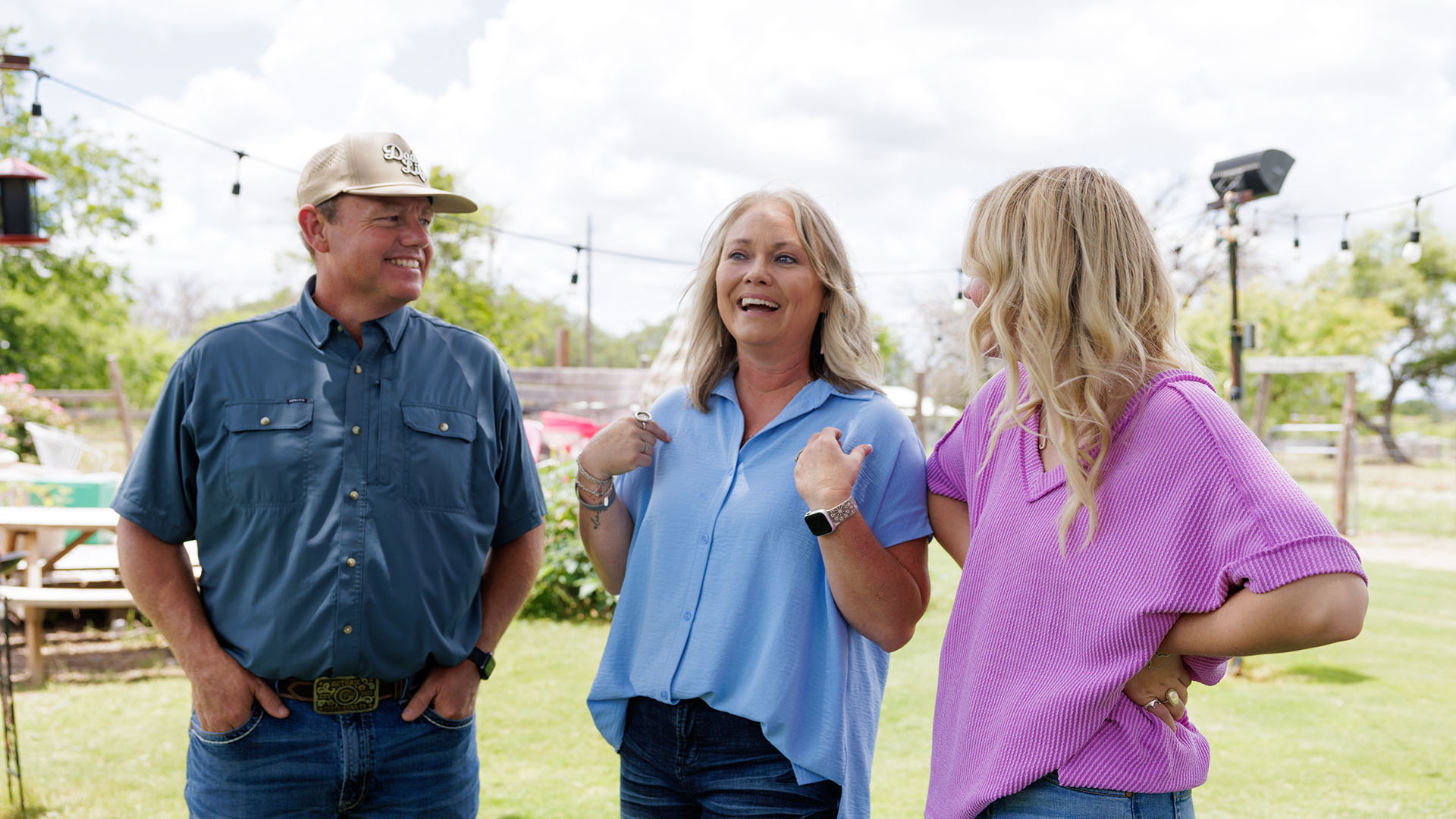
Matthew Fultz, MD, Trauma Medical Director at JPS, said that’s where a Level I Trauma Center makes a critical difference.
“Many hospitals have the individual pieces needed to treat one or two injuries,” said Dr. Fultz. “But when someone has critical injuries involving multiple organ systems, a Level I Trauma Center is required to have all of the resources and specialists needed to care for that patient.”
Among those teams caring for Mylee was Peter Wickwire, MD, Otolaryngologist/Ear, Nose & Throat surgeon, who treated her extensive facial injuries.
“She suffered pretty complex [injuries to the facial bones],” Dr. Wickwire said. “Her mid-face was essentially separated from the base of her skull, and she had fractures around her eye socket. There isn't a lot of room for error with injuries like that, so it's important to get everything very precise.”
Using advanced imaging, intraoperative CT technology, and stereotactic navigation, the surgical team carefully reconstructed Mylee's facial injuries, restoring both function and appearance.
For Dr. Wickwire, access to that level of technology is one of the many reasons patients with complex injuries benefit from treatment at a Level I Trauma Center.
“JPS is a fantastic place to be a patient and to be a surgeon, particularly for trauma but beyond trauma care as well,” Dr. Wickwire said. “JPS offers state-of-the-art care, and it's pretty well unrivaled as far as its ability to offer top-of-the-line care.”
While the technology and expertise played a critical role, Mylee's family remembers something else just as vividly: the people at JPS who cared for her.
Nurses checked on them long after their shifts ended, and team members celebrated small milestones alongside them. Before one of Mylee's surgeries, Dr. Wickwire asked if he could pray with her, a moment that Mylee still remembers clearly.
“That was the most peace I've ever felt,” Mylee said.
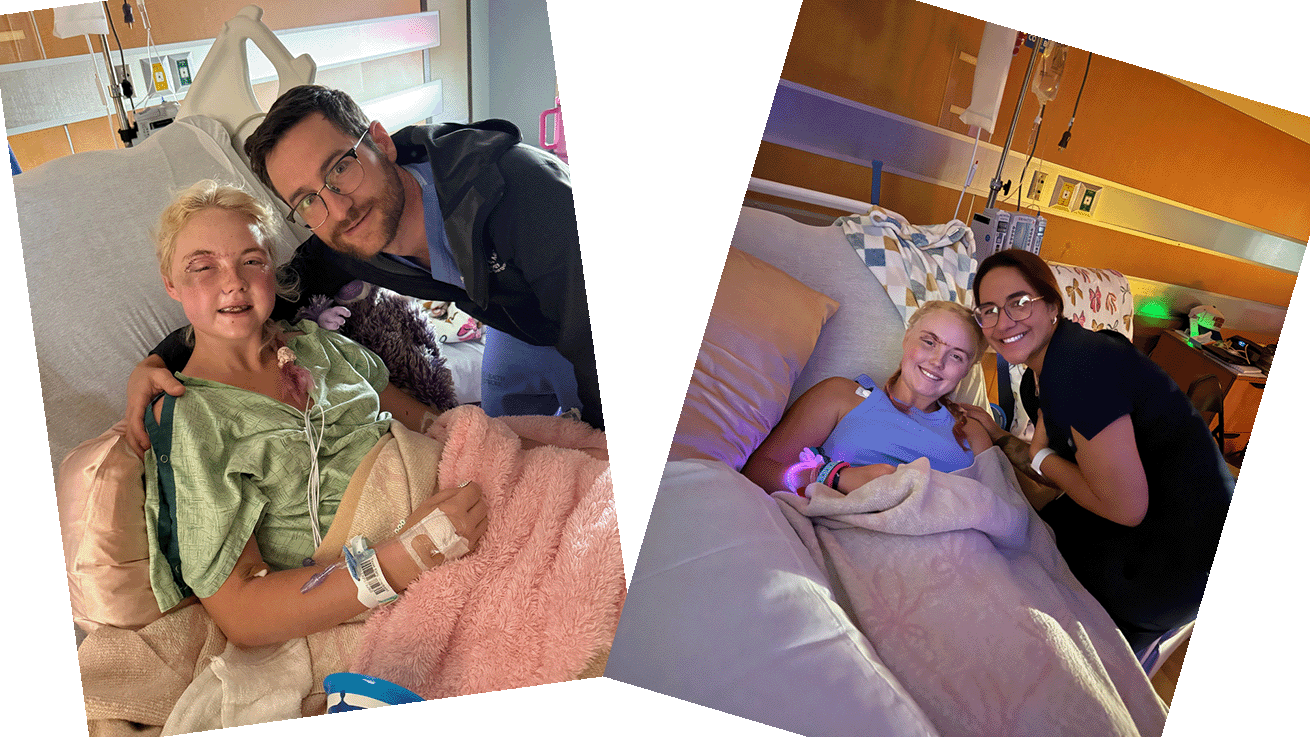
Her mother, Briana Guthrie, remembers that same sense of comfort throughout their time at JPS.
“It wasn't just, ‘We're here to patch you up and send you on your way,’” Mrs. Guthrie said. “It’s, ‘We're here to take care of you.’”
Although Mylee remembers very little from her hospitalization, she does remember waking up surrounded by family and friends and beginning the road to recovery.
“I was more grateful than scared,” Mylee said.
Today, Mylee is in college pursuing her dream of becoming a teacher. Looking back, she credits both her faith and the care she received for helping her move forward.
“My Lord saved my life,” Mylee said. “JPS saved my life.”
For the team at JPS, Mylee's recovery reflects what trauma care is ultimately about: helping patients return to the lives they were living before injury.
“First and foremost, it speaks to Mylee's grit and determination, along with the support she had from her family,” Dr. Fultz said. “From our standpoint, it represents teamwork. Patients with the best outcomes after critical injuries are those cared for by teams that work together well, and that's something we take great pride in at JPS. Our goal is to help patients get back to the lives they were living before their injury.”
That work begins long before a patient arrives at JPS. Across the region, hospitals, EMS agencies, and trauma teams work together to ensure patients get the right level of care at the right time. For patients with the most complex injuries, that coordination can make all the difference.
Today, a year after the crash, Mylee says the experience gave her a new appreciation for life, the people around her, and the community that carried her through one of the hardest moments she and her family have ever faced.
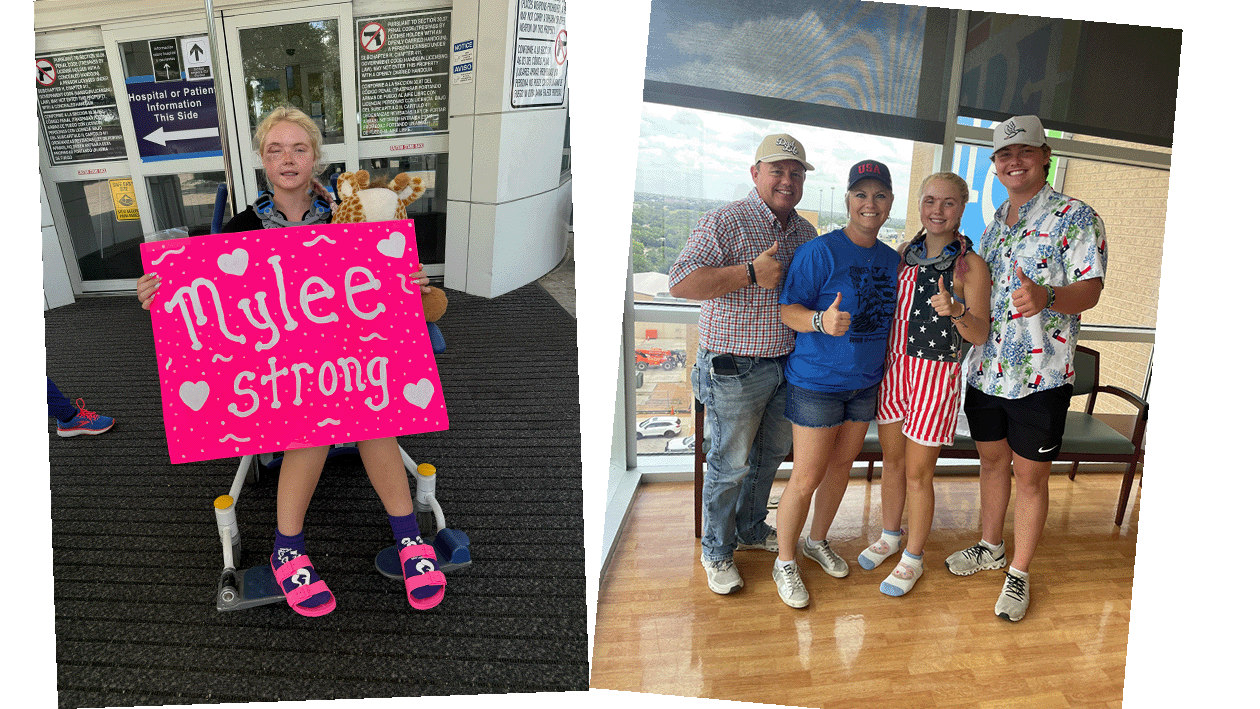
“I'm not even mad that I wrecked,” Mylee said. “I'm grateful that it changed my life.”
Her story is a reminder of what specialized trauma care makes possible: the chance to heal, recover, and return to the people, plans, and future that matter most.
To learn more about JPS, visit https://jpshealthnet.org/get-care/services/trauma.
How the trauma system worked for Mylee
Mylee’s care is an example of how trauma centers across Texas work together to connect patients with the right level of care at the right time.
After her crash, Mylee was first taken to Hendrick Medical Center Brownwood, a Level III Trauma Center that provides important trauma care close to home for patients across the region. Her care team quickly recognized that her injuries were too complex to be managed locally and arranged for transfer to JPS.
Within the Hendrick system, Hendrick Medical Center Abilene serves as a Level II Trauma Center, while JPS Health Network serves as a Level I Trauma Center with 24/7 access to specialized trauma teams, advanced surgical capabilities, and the full range of resources needed to care for the most critically injured patients.
That kind of coordination is exactly what a regional trauma system is designed to do: make sure patients receive the right care, in the right place, at the right time.
In 2025, the Texas Department of State Health Services recognized JPS as Designated Facility of the Year for its collaboration with Hendrick Medical Center. The award highlighted a shared mentorship and communication framework focused on trauma transfers, patient follow-up, and continuous improvement across the regional trauma system.